Agents of S.H.I.E.L.D. review and analysis insights begin when Marvel’s Agents of S.H.I.E.L.D. on ABC premiered in September 2013, making history as the very first television series set within the Marvel Cinematic Universe. Created by Joss Whedon, Jed Whedon, and Maurissa Tancharoen, the show initially functioned as a direct narrative extension of the films, tracking the clandestine operations of global intelligence agents in a world suddenly overflowing with superheroes, alien invasions, and hidden threats.
For readers of The Multiverse Reel, exploring how S.H.I.E.L.D. evolved from a traditional spy network into a time-traveling, space-faring anomaly task force is essential to understanding the deep lore of Marvel’s expanded television landscape. You can also track character journeys via our Marvel Characters Database.
1. Character & Event Profile: Phil Coulson and His Elite Team
The Return of Phil Coulson in Agents of S.H.I.E.L.D. review
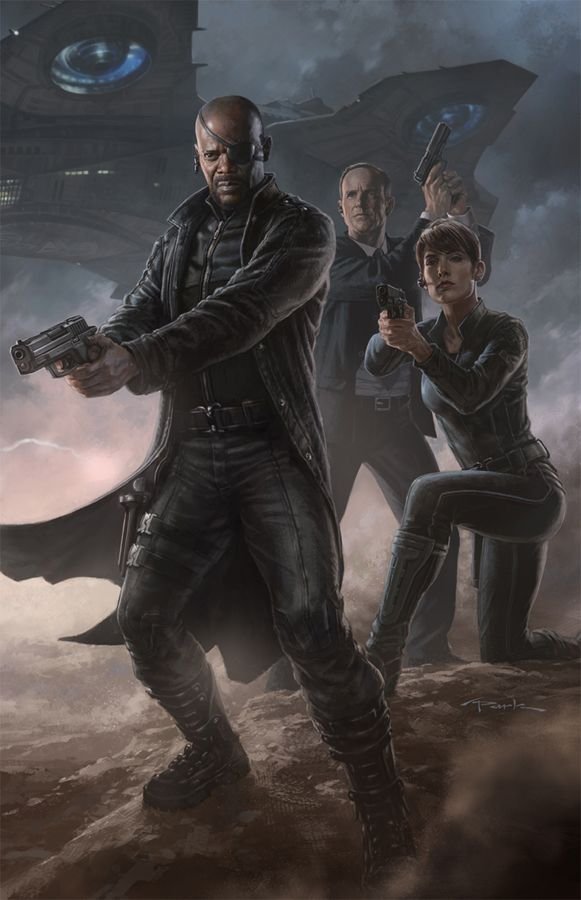
The narrative covered in this Agents of S.H.I.E.L.D. review kicks off by revealing a massive twist: Agent Phil Coulson (Clark Gregg)—beloved by fans and seemingly killed by Loki in the 2012 Avengers film—survived through a secretive, high-tech revival project known as T.A.H.I.T.I. Handpicked by Nick Fury, Coulson assembles a specialized, tightly-knit team of operatives to handle strange cases that conventional law enforcement cannot touch.
The Core Agent Roster
The core team includes:
Agent Melinda May (Ming-Na Wen): The lethal, stoic combat master and pilot known across the agency as “The Cavalry.”
Skye / Daisy Johnson (Chloe Bennet): A brilliant computer hacker recruited into the agency who eventually discovers she is actually an Inhuman with earth-shattering seismic powers (Quake).
Leo Fitz & Jemma Simmons (Iain De Caestecker and Elizabeth Henstridge): The brilliant, inseparable scientific and engineering backbone of the team.
Ward, Mack, and Bobbi Morse: Various specialists who cycle through the ranks, adding layers of tactical espionage and emotional complexity.
As the series progresses, the team faces monumental paradigm shifts—most notably the catastrophic collapse of S.H.I.E.L.D. from within during the events of Captain America: The Winter Soldier, forcing Coulson and his loyal agents to operate as underground outlaws rebuilding the organization from scratch.
Track narrative expansions via our Marvel Movies Hub.
2. Quick Series Profile
| Parameter | Details |
|---|---|
| Series Title / Years | Marvel’s Agents of S.H.I.E.L.D. — Seasons 1–7 (2013–2020) |
| Total Episodes | 136 episodes across 7 seasons |
| Key Cast | Clark Gregg, Ming-Na Wen, Chloe Bennet, Iain De Caestecker, Elizabeth Henstridge, Henry Simmons, Natalia Cordova-Buckley |
| Core Theme | Found family, resilience, sacrifice, government corruption, and shifting timelines |
| Database Source | The Multiverse Reel Official Database |
3. Complete Powers, Alien Lore & High-Tech Evolution in Agents of S.H.I.E.L.D. review
From Street Espionage to Cosmic Sci-Fi
Every detailed Agents of S.H.I.E.L.D. review highlights what defined the show under its distinct Marvel banner: its incredible narrative ambition, scaling up from grounded spycraft into cosmic sci-fi over its seven-year run:
The Inhuman Outbreak: Introducing the Terrigen Mist and a hidden society of super-powered humans long before mutants became prominent in the main MCU timeline.
Advanced S.H.I.E.L.D. Tech & L.M.D.s: Utilizing Life-Model Decoys (android duplicates with transferred consciousnesses), advanced Quinjets, and holographic framework realities.
Extraterrestrial & Mystical Artifacts: Encountering Kree monoliths, ancient alien structures, space travel, and early iterations of magical texts like the Darkhold.
Multiverse Reel Insight: S.H.I.E.L.D. proved that television could sustain epic, multi-season world-building with limited broadcast budgets. Read more via our Multiverse Reel News Hub.
4. MCU Evolution: The Canon Debate and Multiversal Divergence
Tracking Continuity Across Timelines
While Agents of S.H.I.E.L.D. was initially launched as a strict companion to the Infinity Saga films, its relationship with Marvel Studios’ overarching timeline has been a subject of intense fan debate:
The Direct Movie Tie-Ins: Early seasons directly reacted to major cinematic events, such as the fall of the Triskelion in Captain America: The Winter Soldier and setting up the prelude to Avengers: Age of Ultron.
Diverging into Time Travel: In its later seasons (particularly Seasons 5 through 7), the show leaned heavily into space exploration, dystopian futures, time loops, and alternate timelines—effectively separating its localized reality from the main Sacred Timeline.
The Multiverse Relegation: Modern official MCU companion books generally treat the Marvel Television library as existing in a separate branch of the multiverse, though fans still champion its 136-episode run as the ultimate television “side-quest” of the Infinity Saga.
5. The Human Side of the Multiverse
Beyond the alien incursions, Hydra moles, and time-travel paradoxes, the beating heart of Agents of S.H.I.E.L.D. has always been its depiction of found family. The deep platonic bond between Fitz and Simmons, Coulson’s fatherly devotion to Daisy, and the sheer loyalty of a group of ordinary humans standing up against impossible cosmic odds anchor the show’s massive emotional weight.
6. Frequently Asked Questions (FAQs)
Q1: Is Agents of S.H.I.E.L.D. considered official MCU canon in Agents of S.H.I.E.L.D. review?
Q2: How does Phil Coulson come back to life in Agents of S.H.I.E.L.D. review?
Q3: What triggers the team's shift into cosmic and time-travel stories?
Q4: Which core characters undergo the most transformation throughout the series?
Q5: Where can I watch the content covered in Agents of S.H.I.E.L.D. review?
7. Final Verdict & Fan Community Discussion
Agents of S.H.I.E.L.D. is a sprawling, wildly inventive, and deeply rewarding television epic that expanded the boundaries of what a comic book show could achieve on a weekly network budget.
Join the Discussion on The Multiverse Reel
Where does Agents of S.H.I.E.L.D. rank for you among Marvel’s television projects in this Agents of S.H.I.E.L.D. review, and do you view it as part of the main MCU timeline? Share your thoughts below or join our Community Forum!